Sarnath’s UNESCO Nomination : A Journey from Tentative to Global Recognition
Context
India has nominated Sarnath for the UNESCO World Heritage List (2025–26 cycle), potentially ending its 27-year-long wait on the tentative list. The Archaeological Survey of India (ASI) will also install a new plaque, giving due credit to Babu Jagat Singh (1787–88) for first highlighting Sarnath’s archaeological importance—correcting earlier misattribution to British officials.
About Sarnath
What is Sarnath?
- One of the four holiest Buddhist pilgrimage sites (others being Lumbini, Bodh Gaya, Kushinagara).
- Located ~10 km northeast of Varanasi, Uttar Pradesh.
- Revered as the place where Gautama Buddha delivered his first sermon (Dhammachakkappavattana Sutta), marking the beginning of the Buddhist Sangha.
Origin and Early History
- Known as Mrigadava (Deer Park) or Rishipatana in Buddhist texts.
- Emperor Ashoka (268–232 BCE):
- Erected the famous Lion Capital Pillar (now India’s National Emblem).
- Constructed stupas and monasteries.
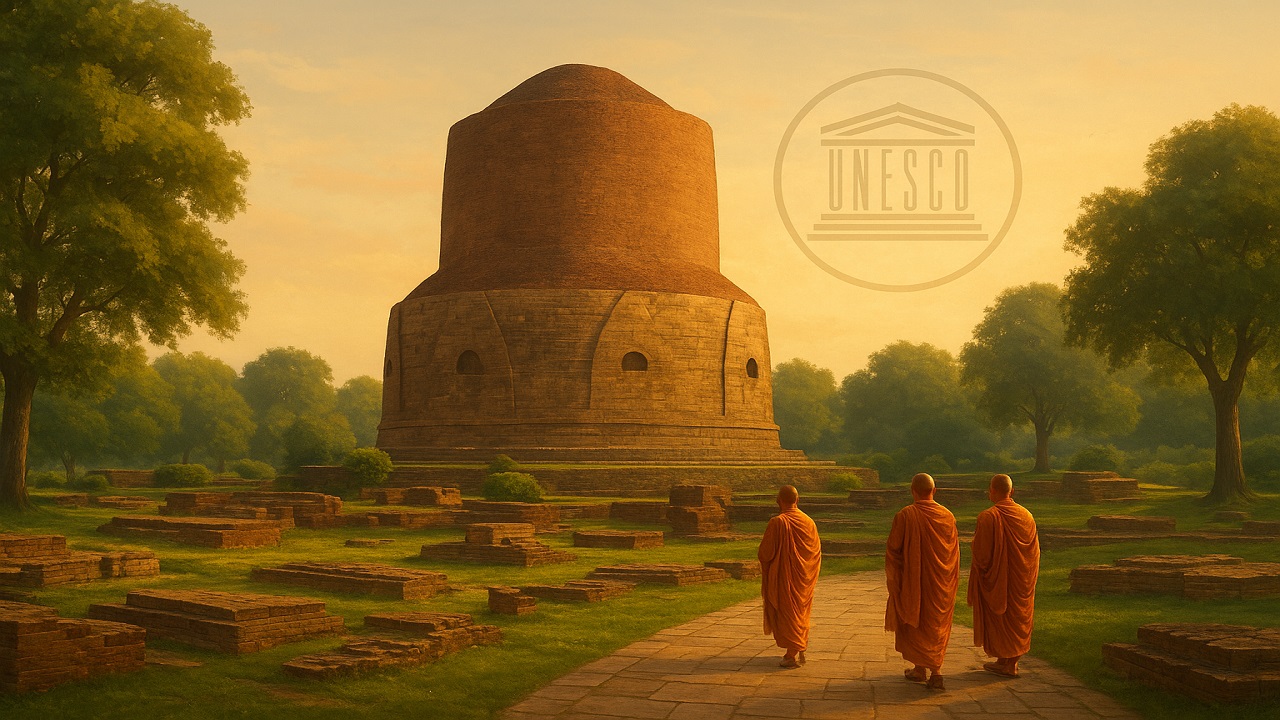
- The Dhamek Stupa marks the spot of Buddha’s sermon.
- Monastic ruins (viharas) reveal flourishing community life in early centuries.
Patronage and Flourishing Period
- Ashokan Patronage: Transformed Sarnath into a major Buddhist pilgrimage centre.
- Kushana and Gupta Dynasties (1st–6th CE):
- Expanded and refurbished stupas, monasteries, and educational centres.
- Sarnath emerged as a thriving monastic hub.
- The site continued to flourish until the 12th century CE.
Decline and Destruction
- 12th century CE: Sarnath faced widespread destruction.
- Causes debated among historians:
- Some attribute it to Qutb-ud-din Aibek’s invasion (1193 CE).
- Others to a brahmanical takeover attempt, later followed by Islamic raids.
- Monks abandoned the site; it remained in ruins for nearly seven centuries.
Modern Rediscovery
- 1787–88: Workers of Jagat Singh unearthed Buddha images while quarrying.
- 1799: Jonathan Duncan reported these findings, drawing British interest.
- 1835–36: Alexander Cunningham conclusively identified Sarnath as Buddha’s sermon site.
- 1904–05: Friedrich Oertel conducted systematic excavations, discovering 476 artefacts and 41 inscriptions.
Key Features Today
- Dhamek Stupa: Cylindrical stone stupa at the sermon site.
- Ashokan Pillar & Lion Capital: The Lion Capital now serves as India’s National Emblem.
- Sarnath Archaeological Museum: Preserves relics, sculptures, and inscriptions, including the famous Seated Buddha in Dharmachakra Mudra.
Conclusion
Sarnath is not only a sacred Buddhist site but also a symbol of India’s cultural, spiritual, and historical richness. Its nomination to the UNESCO World Heritage List is a step towards ensuring global recognition, preservation, and cultural pride. At the same time, it strengthens India’s role in Buddhist diplomacy and promotes heritage tourism on the world stage.
Source : The Indian Express