
Context
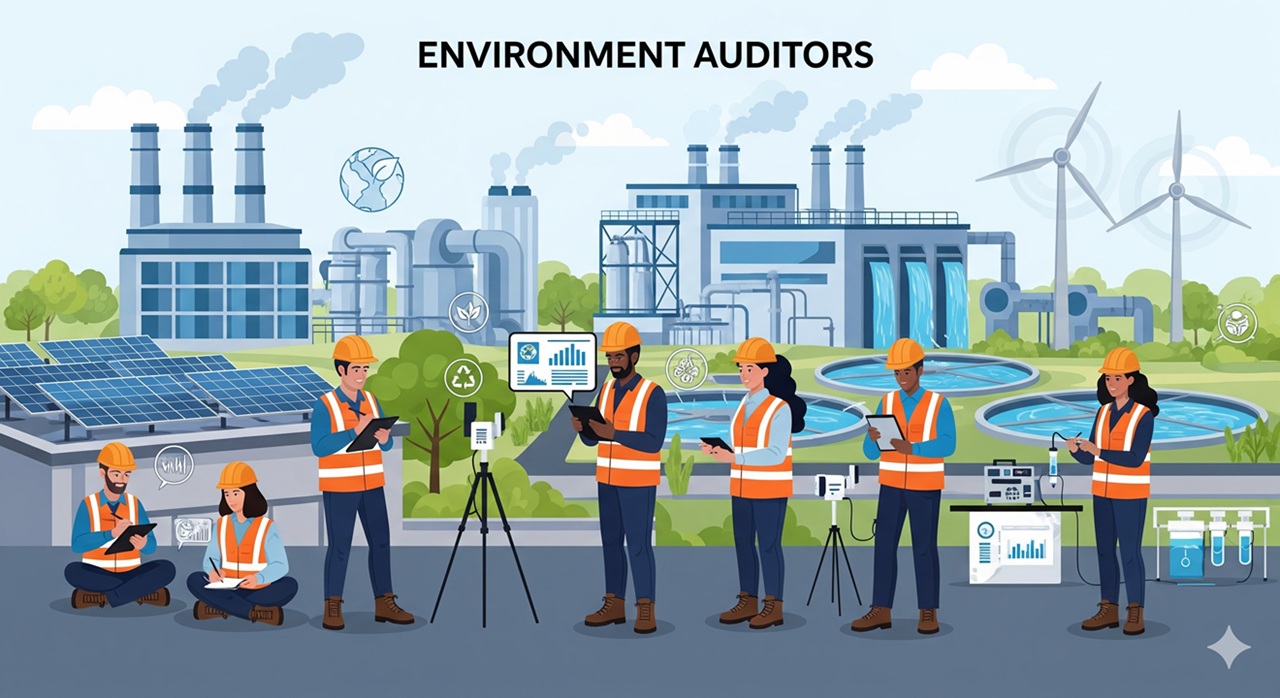
The Government of India has recently approved the creation of a new and independent class of professionals called “Environment Auditors”. These auditors have been formally introduced under the Environment Audit Rules, 2025, notified by the Ministry of Environment, Forest and Climate Change (MoEFCC) on 29 August 2025.
This initiative has been undertaken to strengthen environmental governance, address the manpower and infrastructure gaps faced by Central and State Pollution Control Boards (CPCB/SPCBs), and ensure greater compliance, transparency, and accountability in environmental monitoring.
About Environment Auditors
What are they?
- A newly created category of certified professionals or accredited agencies.
- Authorised to inspect, verify, and audit industrial and infrastructure projects.
- Ensure compliance with environmental laws, sustainability norms, and green commitments.
Legal Basis: Established under the Environment Audit Rules, 2025.
Objectives
- Bridge institutional gaps – Overcome manpower and technical deficits of CPCB/SPCBs.
- Promote accountability – Encourage self-compliance among industries and project developers.
- Enhance transparency – Bring credibility and public trust into environmental monitoring.
Functions
- Conduct systematic environmental audits of regulated projects.
- Sample and analyse emissions, effluents, and waste.
- Report non-compliance and help in computing environmental compensation.
- Serve as verifiers under:
- Green Credit Programme
- E-Waste Management Rules
- Plastic Waste Management Rules
- Provide independent assessments for:
- Climate action initiatives
- ESG (Environment, Social & Governance) ratings
Significance
- Strengthens governance: Supplements CPCB/SPCBs with an independent layer of monitoring.
- Reduces regulatory burden: Eases workload on Pollution Control Boards.
- Improves compliance culture: Industries face credible and transparent scrutiny.
- Supports climate goals: Aligns monitoring with India’s sustainability commitments and global ESG standards.
Conclusion
The creation of Environment Auditors marks a landmark reform in India’s environmental governance system. By introducing a dedicated, professional class of auditors, the government aims to ensure that environmental compliance is not just a regulatory formality but a transparent, accountable, and scientifically verifiable process.
This reform is expected to strengthen institutional capacity, build industry responsibility, and accelerate India’s transition towards sustainable development and climate resilience.
Source : The Hindu